What Does Being on a Ventilator Actually Mean? A Guide for Families
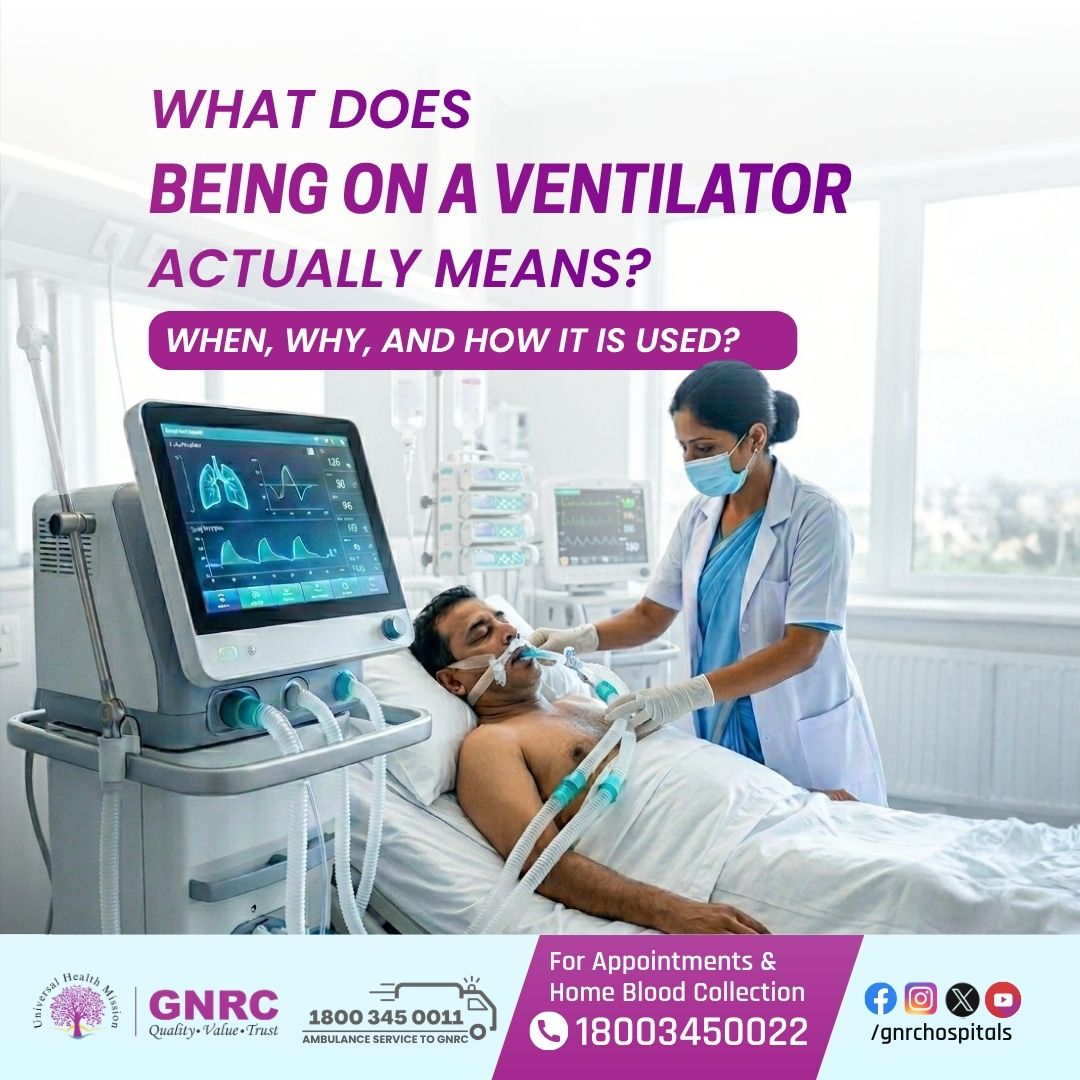
It is not uncommon for doctors or healthcare professionals to inform family members, that a patient has been placed on Ventilator support. This announcement often leads to the assumption that the patient is in a very critical condition with a poor chance of survival. However, being on ventilator support does not necessarily indicate a terminal prognosis. Let’s understand what does it actually mean when a patient is on Ventilator Support?
What is a Ventilator?
A mechanical ventilator is a crucial medical device that provides lifesaving assistance to patients who are unable to breathe on their own due to their critical state of health. Doctors generally use the support of ventilators if a person cannot breathe adequately to maintain the levels of oxygen and carbon dioxide in their body, as required for essential organ function.
If you have a family member or loved one on a ventilator, here are few things you must know and understand:
When is a Ventilator support required?
A ventilator support is required and is necessary when a patient experiences respiratory failure, a serious condition that impairs the ability to breathe independently. In such cases the patient is unable to absorb enough oxygen into the lungs and expel carbon dioxide from the body.
Various injuries and conditions such as Acute Respiratory Distress Syndrome (ARDS), Cardiac arrest, COVID-19, Head injury, Lung disease, Pneumonia, Stroke, Spinal cord injury and Sepsis can lead to a respiratory failure.
Why a Ventilator support is required?
A mechanical ventilator is used to reduce the strain on the heart and lungs until the patient improves sufficiently to breathe on his/ her own. The brain, heart, liver, kidneys, and other vital organs won’t be able to function optimally if they don’t get enough oxygen.
 How does a Ventilator work?
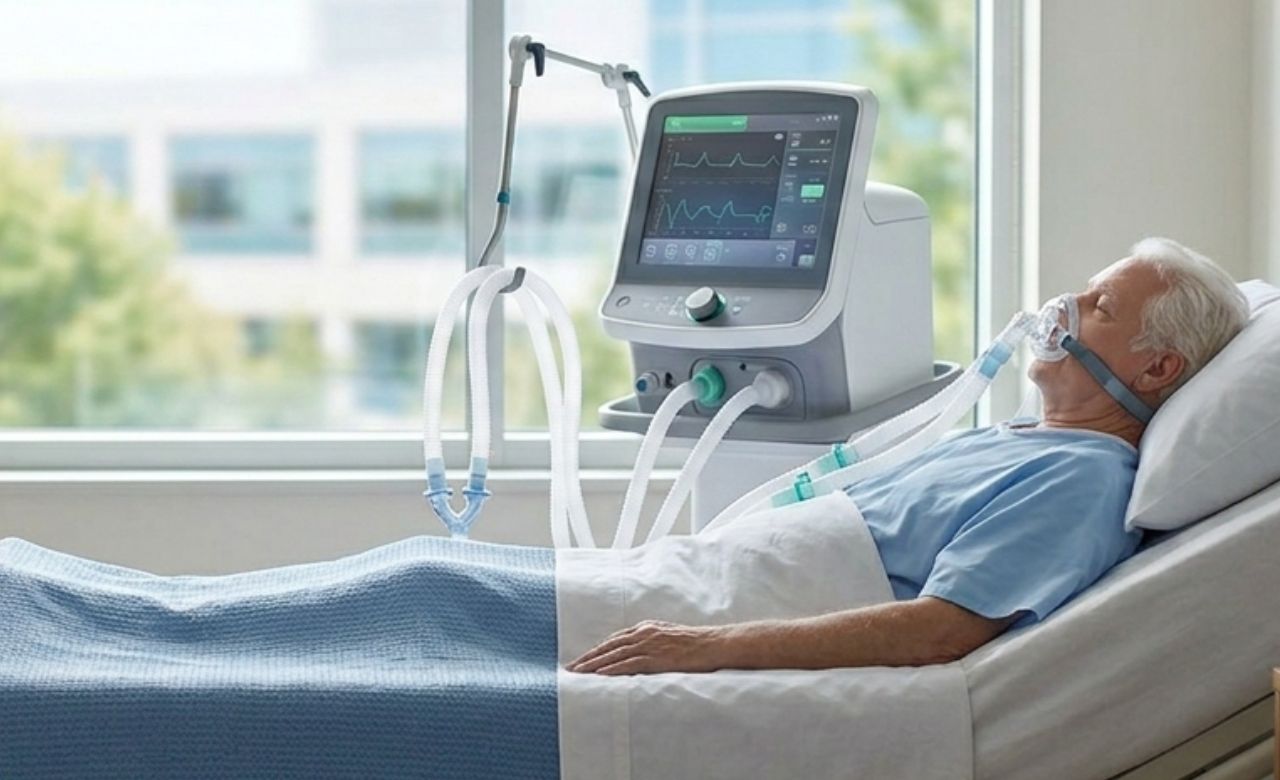
A mechanical ventilator is a machine that works to ensure smooth airflow to an from the lungs. The respiratory therapist and intensivist adjust the ventilator settings to control how often air is delivered to the patients’ lungs and the amount of oxygen provided. Oxygen from a ventilator can be pushed into the patient’s lungs either with a fitted mask or with the help of a breathing tube.
What are the Benefits of Ventilator Support?
- The patient is relieved of the stress to breathe, which allows the respiratory muscles to rest and gain strength.
- Help the patient receive enough oxygen and remove carbon dioxide from their lungs.
- Preserves a stable airway.
- Prevents injury from aspiration (inhaling any kind of foreign object or substance into your airway usually food particles, saliva or other stomach contents).
What are the risks of being on a Ventilator?
Patients on ventilator support at times have the risk of developing pneumonia (due to bacteria entering through the artificial airway). The risk of infection increases, longer the patient is on ventilation support. Other risks include - throat irritation, vocal cord issues and lung injury.
Does Ventilator Support hurt the patient?
Patients are given specialized medications to help them relax and stay completely calm while connected to a ventilator. This keeps the experience peaceful and pain-free, preventing any discomfort from the equipment.
What to expect during removal of a Ventilator?
If the patient’s condition improves the doctors may decide to extubate (remove the breathing tube out). Weaning is the process of gradually taking someone off of a ventilator support, so that they may begin to breathe on their own while they are still connected to the ventilator.
Before extubating, doctors assess the patient’s ability to breathe without assistance. An important part of the evaluation is the Glassgow Coma Scale (GCS)- a neurological scale that helps the doctors evaluate the patient’s level of consciousness. Generally, a GCS score of 8 or above indicates the patient is awake and responsive enough to protect their airway and breathe on their own. Once the patient is stable, conscious and able to breathe adequately, the breathing tube is removed and ventilator is turned off.
However, it is important to understand that mechanical ventilation does not cure the patient. Rather, it allows the patient an opportunity to be stable while the medications and treatment procedures help them to recover.
